Graveyard Keeper 2 Corruption and Red Skulls Explained
Red skulls are corruption. Graves want white skulls, zombies want red ones, and every red skull is one perk slot. Here is how corruption is added and capped.
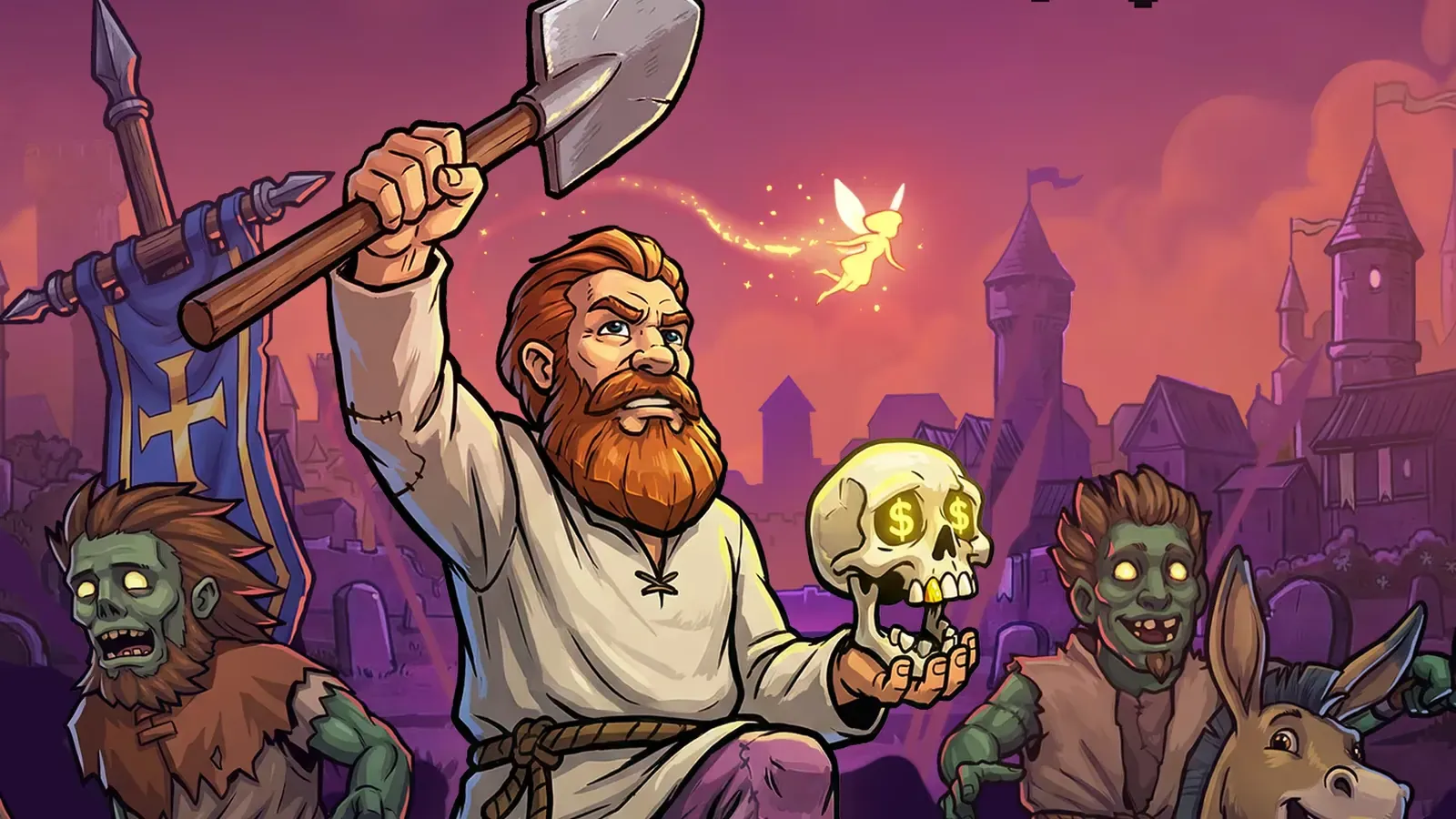
What are red skulls in Graveyard Keeper 2?
Red skulls are corruption made visible. Your graveyard wants the opposite of what your zombies want: white skulls score graves, while red skulls are what zombie workers consume. Each red skull on a corpse equals one perk slot, so a zombie with zero red skulls cannot equip a single perk.
The two systems read the same number in opposite directions, which is the most confusing thing about them. Fextralife states it plainly: more red skulls and fewer white skulls are better for zombies. A grave row only counts as quality when it carries both a white skull and a gravestone decoration, and a red skull row never counts at all.
Why do zombies want more red skulls than white ones?
Because red skulls are perk slots. Every perk node and every mastery upgrade you buy on a zombie occupies one red skull slot, so a corpse’s corruption sets that worker’s entire build ceiling. White skulls do nothing for a zombie — they are purely a graveyard stat.
The official devlog frames the same direction in softer language: “The more corrupted a zombie is (red skulls), the better skills it can develop.” Read that as a statement about capacity rather than speed, because the mechanics pages describe red skulls as slot count and nothing else. Perk effects and node costs are on zombie mastery and perks.
Where does corruption come from?
Corruption comes from sinners. The more comfortable you make life for the townsfolk, the more reliably the corpses that arrive are sinner bodies carrying red skulls. Raising town comfort is therefore a zombie upgrade, not just a quest chore you finish for gratitude.
If an incoming body is not corrupt enough, the official devlog describes two fixes: take the most corrupted organs off other corpses and assemble them onto the body you care about, then apply corruption embalming “to put a cherry on top”. The town work that produces sinners is covered in the town restoration guide.
How do you move corruption onto a different corpse?
You transplant organs. Organ slots carry their own skull values, so pulling a highly corrupted organ out of one corpse and placing it into another moves red skulls across bodies. Corruption embalming then tops the assembled corpse up before it ever reaches the resurrection window.
What do Solution and Injection for Zombies add?
Solution for Zombies I, II and III add +1, +2 and +3 red skulls with no white skull penalty. Injection for Zombies I, II and III add the same +1 to +3 red skulls but also subtract 1 to 3 white skulls. Both are built from 1 Alcohol and 1 Preservative; injections additionally need 1 Comet’s Tail.
| Mixture | Red skulls | White skulls | Materials | Sell price |
|---|---|---|---|---|
| Solution for Zombies I | +1 | 0 | 1 Alcohol + 1 Preservative | 2s |
| Solution for Zombies II | +2 | 0 | 1 Alcohol + 1 Preservative | 12s |
| Solution for Zombies III | +3 | 0 | 1 Alcohol + 1 Preservative | 60s |
| Injection for Zombies I | +1 | −1 | 1 Alcohol + 1 Preservative + 1 Comet’s Tail | 3s |
| Injection for Zombies II | +2 | −2 | 1 Alcohol + 1 Preservative + 1 Comet’s Tail | 13s |
| Injection for Zombies III | +3 | −3 | 1 Alcohol + 1 Preservative + 1 Comet’s Tail | 80s |
For burial you want the mirror-image items: Solution and Injection for Corpses, which add white skulls or trade red for white. Mixing those two families up is how players accidentally ruin a grave body.
Where do you make and apply corruption embalming?
Both families are mixed at the Formulation Bench and applied at the Embalming Table I. The tier — I, II or III — is decided by the quality of the solution you crafted, not by a separate recipe switch. The bench craft and the table application are two different steps.
Bench upgrades, storage and the rest of the station list sit on the crafting stations list, which is worth checking before you build a second Formulation Bench for a body you only intend to revive.
How high can red skulls go on an arriving corpse?
The red skull ceiling on arriving corpses rises with the main quest. At the start bodies arrive with 0–1 red and 2–4 white skulls. After Brawns and Brains that becomes 1–5 red and 1–5 white, and after The House at the Crossroads it becomes 3–7 red and 3–7 white.
| Main quest progress | Red skulls on arriving corpses | White skulls on arriving corpses |
|---|---|---|
| Start of the game | 0–1 | 2–4 |
| After Brawns and Brains | 1–5 | 1–5 |
| After The House at the Crossroads | 3–7 | 3–7 |
Prayer for Repose also matters here: with the God of dead buff active, every arriving corpse is pushed one row further down that table. That is why a zombie-heavy setup only takes off once the mid-game quests are done — the raw material simply is not corrupt enough before then.
Do red skulls help graveyard quality at all?
No. Grave quality counts white skulls paired with gravestone decorations, and a row carrying a red skull never contributes. Red skulls are a zombie-only resource, so the same corpse can be a poor grave and an excellent resurrection candidate at the same time.
How does this tie into a resurrection?
The collar caps how many red skulls a zombie can keep. The lab refuses any corpse whose red skull count exceeds the collar’s cap, which is why you build the corruption first and match the collar to it second. The full revival chain, including the three collar tiers, is on how to get zombie workers.
Once the worker is up and running, what it can actually be assigned to — and how the supply chain around it is built — is on the zombie production line page.
Related Articles
zombies
Graveyard Keeper 2 Zombie Workers — How to Get Every One
Five zombie workers are free from the Plague Doctor and Gunter. Every extra worker needs a clean corpse, Reanimation Liquid, a matching collar and an Envy day.
zombies
Graveyard Keeper 2 Zombie Mastery and Perks — Full Breakdown
Five masteries, 85 nodes and 49–50 named perks: zombie mastery is set by the work station, not the zombie, and every node you buy eats one red skull slot.
zombies
Graveyard Keeper 2 Zombie Production Line — Automation Setup
Build a real production line: one operator per station, one supplier per zone, porters between zones, and enough carousel power for every conveyor tile.
Was this helpful?
Thanks for the feedback!